


This story feels more like a challenge, an attempt to conquer the Los Angeles scene during a time marked by rigid standards and racial stereotypes. In the vibrant city of dreams, right in the center of Hollywood, the story of the struggle for equality and the belief that talent knows no bounds has captured both attention and acclaim. None of this would have been possible without the commitment of Joseph Rickard, the founder and teacher. Further insights will be shared by los-angeles-trend.
Joseph Rickard and the establishment of the ballet company
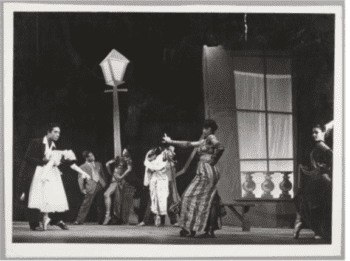
He was a talented teacher who established and directed the African American classical ballet company in Los Angeles, known as the First Negro Classic Ballet, which operated from 1946 to 1959.
The inspiration for establishing this institution was triggered by witnessing the rejection of a young African American girl. She had a passion for ballet and dreamed of dancing, but the only reason she was turned down was because of her skin color. Joseph Rickard was so shocked and infuriated by this that he decided to establish his own ballet dance company showcasing African American performers.
As a result, more and more students began enrolling in classes with Ricard. He took the initiative to visit African American communities, drawing in more participants. His intentions were both professional and social, as he aspired to become a choreographer rather than just a dancer.
When he first established the company, the man faced challenges due to limited communication with the African American community in Los Angeles. He was eager to help, but at that time, there were no established African American ballet groups in the community. Additionally, it was tough to find supporters for the initiative, especially when it came to financial backing. Once the ballet company was established, it boasted a membership of more than 30 dancers, with over two-thirds being women, along with a composer and choreographer.
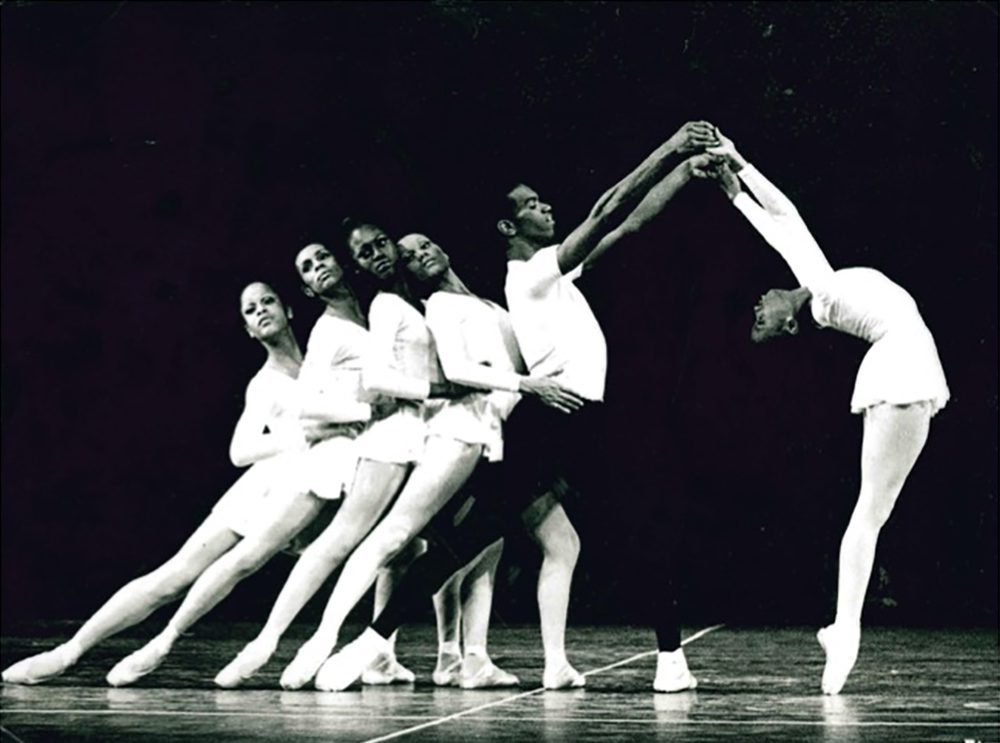
Early ballet companies with African American dancers
It’s worth mentioning that there have been attempts to establish African American ballet companies in the past. Sadly, they struggled to last more than a year. For instance, Katherine Dunham’s Ballet Nègre was established in 1930 and Eugene von Grona’s American Negro Ballet followed in 1937. Neither of these companies lasted longer than six months. The main challenges they faced were financial difficulties and a lack of sponsorship, especially in the aftermath of the Great Depression.
After World War II, interest in ballet began to rise among audiences. As a result, the First Negro Classic Ballet emerged as a prominent company in Los Angeles.
The company’s first performance
The first performance of the African American ballet company took place at the Hollywood High School auditorium. The African American ballet dancers quickly garnered praise and admiration for their performance, winning over the hearts of fans.
Following this, the historic 2,000-seat Los Angeles Philharmonic Auditorium welcomed the company once more. Critics praised the originality, high-quality dancing, music, costumes, sets and skilled staging.
Joseph Rickard wasn’t content to stop there. He boldly took the company to Santa Barbara and San Francisco, which helped to grow their fan base. Even prominent national publications such as Look, Ebony and Dance embraced the African American company, which was also quite revealing.
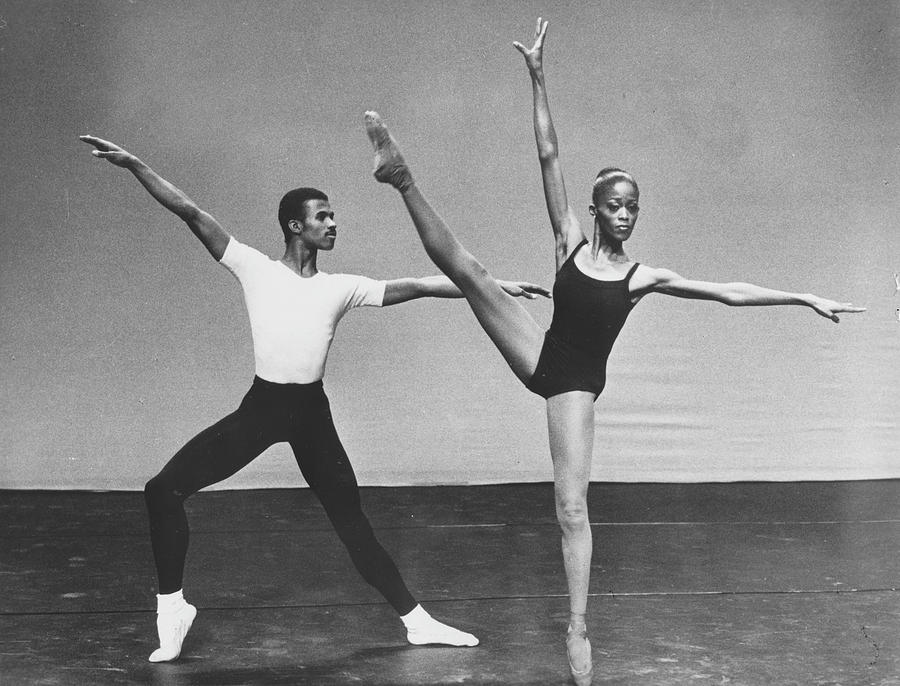
Conditions
Joseph Rickard taught at a dance school located in a deserted ballroom at the intersection of Jefferson and Normandie. The neighborhood was predominantly African American. Although the floor was unsuitable for dancing, Rickard improvised by bringing in a tarp and some chairs.
The man not only taught students but also maintained his job at the post office and operated an ice cream truck. He lived in the ballroom. This way of living enabled the man to accumulate and store money for the company. This shows that Rickard was a determined man who had a vision and pursued it steadily.
‘The country was not ready for a Negro ballet’
That’s precisely how Sol Hurok, the impresario, put it. Some others also held the same opinions as him. Rickard brought it up in 1992. The words were hurtful, yet they contained some truth as well.
Joseph Rickard continued to move forward, choosing a strategy focused on gaining public attention. He motivated African American dancers in various parts of the country to pursue ballet careers. It was truly prideful for him that his students joined the San Francisco Ballet, American Ballet Theater and the National Ballet of Canada. Despite being aware of his students’ success, he remained connected with them and provided ongoing support, offering valuable guidance.
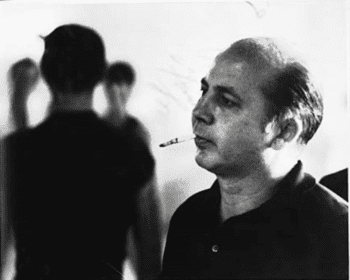
Ballet and Joseph Rickard
The reader may have the wrong impression of who Joseph Rickard was. His life’s journey did not initially involve dance, particularly ballet, or teaching. In fact, his story stands out as more of an exception than the norm.
The man was born in Ann Arbor, Michigan, after which he spent some time in Chicago. Before making his way to Los Angeles, he worked for an insurance company. In the city of dreams and opportunity, he found employment at the post office in Paramount.
By chance or fate, he found himself at a Ballet Russe de Monte Carlo performance at the Philharmonic Auditorium. What he experienced that night changed everything for him. So, at the age of 20, he decided to pursue ballet as a student. This age is often seen as late for ballet, a discipline that demands exceptional physical fitness, flexibility and coordination, both qualities typically developed from a young age, along with a natural talent.
Despite his late start, Irina and Bronislava Nijinska were eager to teach him. The Nijinska’s Hollywood Ballet was a prestigious ballet school run by the sister and niece of the renowned Polish Russian dancer Vaslav Nijinsky. Joseph Rickard recalled this experience with great affection and joy, emphasizing that without the guidance and motivation of Bronislawa Nijinska and the support of her daughter Irina, he would not have been able to establish the African American classical ballet company.
He achieved significant accomplishments and subsequently started his own studio. It is well known that he was able to not only recruit students and establish a unique company but also assist gifted members of the African American community in following their aspirations.
The man also led additional ballet companies for three more decades. This includes the Southern California Ballet and San Gabriel Valley Civic Ballet.
Joseph Rickard passed away at the age of 75 on August 24, 1994, due to heart failure following multiple episodes of pneumonia. He spent his last moments at Glendale Adventist Hospital.
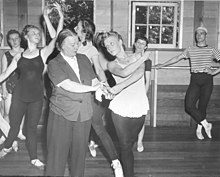
Whom did Joseph Rickard teach?
The dancers were mainly African American, with a handful of Hispanic students. The company included just one white dancer. It’s worth mentioning that due to the low pay, or sometimes no pay at all, the dancers had to juggle multiple jobs. They worked various day jobs and either performed at night or found time during the day to study.
The company was accompanied by its own composer and pianist, Claudius Wilson, a gifted African American musician from New Orleans who had studied at Dillard University.
The merger and the company’s journey
In 1956, Joseph Rickard joined forces with choreographer Ward Flemyng to combine their companies, First Negro Classic Ballet and Flemyng’s New York Negro Ballet. The newly established company started touring across the United States. Surprisingly, the group also had a contract to put on a show in Japan.
However, in 1959, performances came to a halt following the death of the primary sponsor. While some dancers were able to carry on with their careers, for others, it marked the end of a significant dream.
Sources
- https://www.latimes.com/archives/la-xpm-1994-08-26-mn-31378-story.html
- https://mobballet.org/index.php/2021/10/30/about-this-orbit-first-negro-classical-ballet/
- https://www.jstor.org/stable/10.1525/phr.2014.83.3.487?seq=4#metadata_info_tab_contents
- https://mobballet.org/index.php/2021/12/08/first-negro-classical-ballets-orbit-nijinskas-hollywood-ballet/