Actor Dustin Hoffman can’t get away from his fate as a lonely person in an unkind world neither on stage nor on screen. Let him be a gangster or a condemned to death, an unemployed artist or a sad college graduate, a lame tramp or a detective, a composer or a timid mathematician. Let him be anyone. With many faces in art, he has only one face in life. Read more about him on los-angeles-trend.
THE ACTOR’S CHILDHOOD IN SUNNY LOS ANGELES
When the mother of the future actor chose the name Dustin for him, she hardly predicted his destiny. She loved movies, was a passionate admirer of actors and named both of her sons after movie stars of different years. The elder son was named Ronald, in honor of Ronald Colman, a famous English actor of the 1930s. The younger one was named after Dustin Farnum, a popular performer of cowboy roles, a competitor of the famous William Hart. Frequent changes in the social environment and standard of living, as well as the lack of a stable life position in the actor’s childhood, affected the common social affiliation of Dustin Hoffman’s future characters. They are victims, just as little Dustin was a victim of the family’s social instability.
Dustin was born into a family of descendants of Jewish immigrants. Paternal grandfather Frank Hoffman and Esther Cherkovska immigrated to Chicago from Bila Tserkva. At a young age, Hoffman knew he wanted to study art and enrolled at the Los Angeles Conservatory of Music. Later, he decided to pursue acting, for which he interned at the Pasadena Playhouse in Los Angeles.
His theatrical debut was the role of Ridzinski in the play A Cook for Mr. General in 1961. He went on to play several guest roles on television in shows such as Naked City and The Defenders.
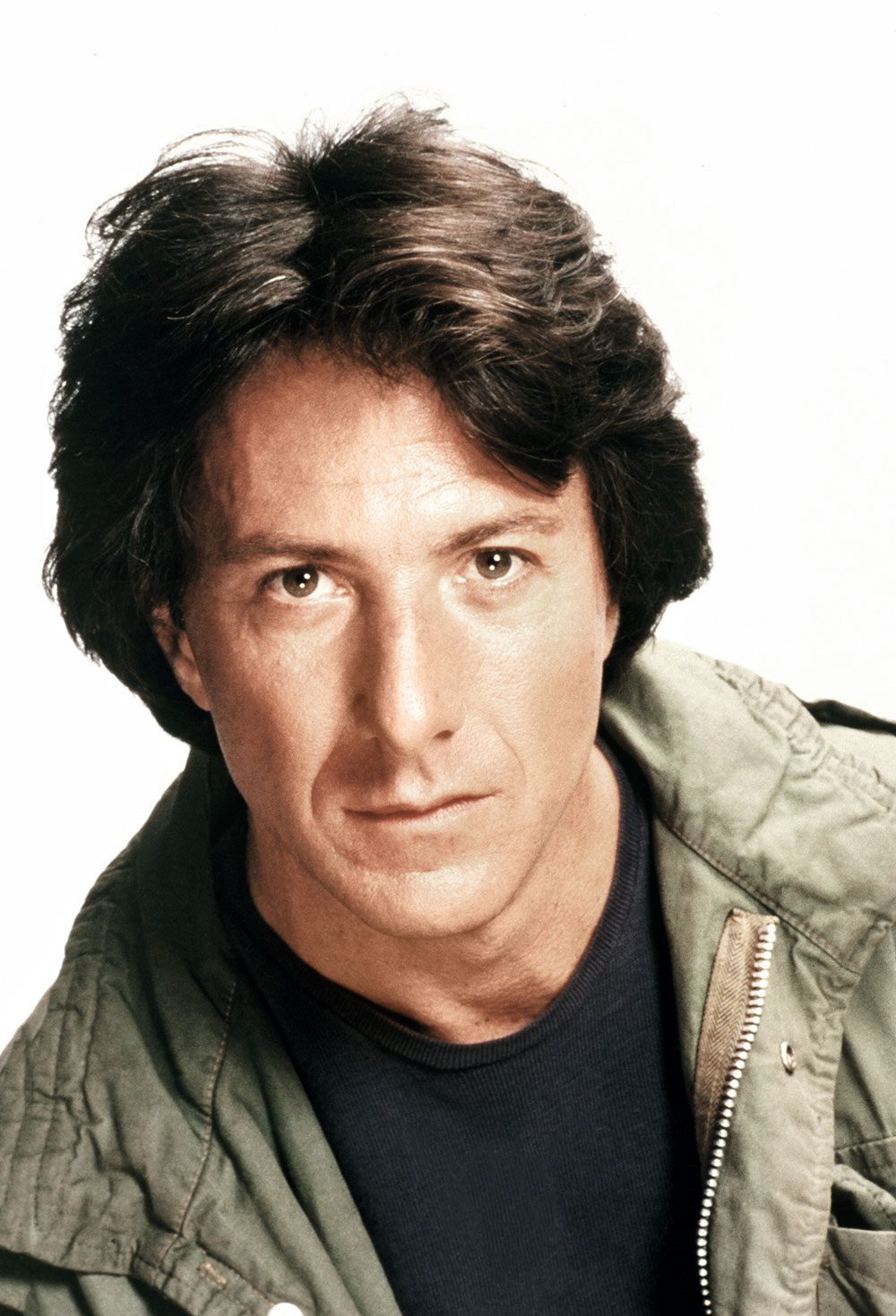
The decade spent by Hoffman in desperate battles for roles, for an individual performance style, was also full of joint struggle of American artists for the social relevance of art. For Hoffmann, this was a general tension in the struggle between liberal and conservative tendencies in art, which accumulated in the offices of theater agencies. When Dustin Hoffman started his career, the film industry had only started to get rid of taste and outlook prejudices.
SUCCESS AND POPULARITY IN THE FILM INDUSTRY AT A MATURE AGE
Dustin achieved success in the 1970s with roles that shaped his acting career. He played numerous anti-heroes, such as a powerless witness to the genocide of Native Americans in Little Big Man (1970), a cowardly mathematician who fiercely defends his house in Straw Dogs (1971), the self-destructive comic Lenny Bruce in Lenny and the former convict who cannot resist the lure of crime in Straight Time (1978). The actor also starred in the prison drama Papillon (1973), Marathon Man with Laurence Olivier (1976) and Carl Bernstein, who investigates the Watergate scandal in the film All the President’s Men (1976).
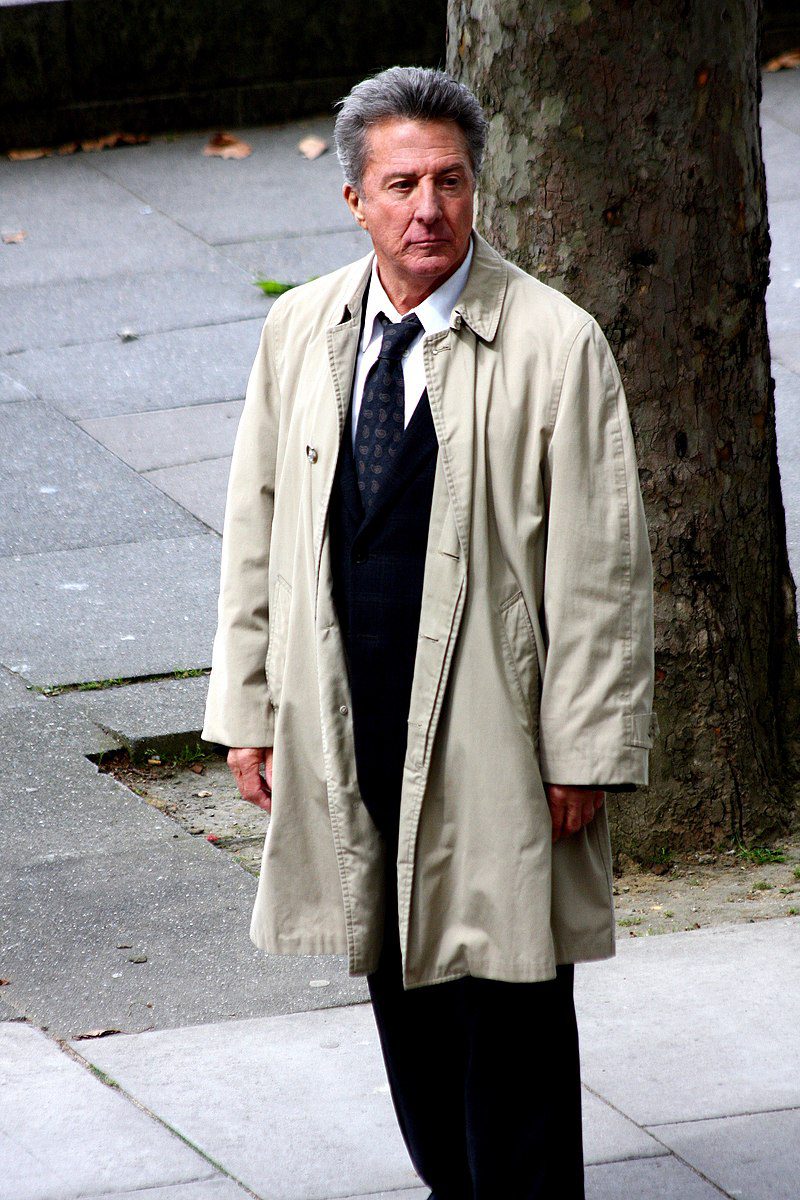
On one of the December evenings in 1967, in front of surprised critics and enthusiastic young moviegoers, who were tired of tales about millionaires and invincible cowboys, a man with a moving, smiling face that was far from the standards of beauty and no longer very young appeared. On the night of the premiere, on the light-filled stage of the cinema, he came out of the darkness as quickly and unexpectedly as he rose to fame from complete obscurity.
After appearing as an actor in the small comedy The Tiger Makes Out (1967), Hoffman starred in his second film, The Graduate (1967) by Mike Nichols, opposite contemporaries Robert Redford and Charles Grodin. Hoffman was 30 years old when he played 21-year-old Benjamin Braddock, a college graduate who, in search of a meaningful future, becomes aimlessly involved in an affair with an older married woman. It was a hugely successful social comedy, the film struck a chord with a young audience disillusioned with the American establishment. Hoffman became a Hollywood star.
In John Schlesinger’s Midnight Cowboy, which won the Academy Award for Best Picture in 1969, Hoffman played ‘Ratso’ Rizzo. He is a tubercular homeless person who makes friends with a loser among male escorts. This film was another success for Hoffman.
THE FIRST ACADEMY AWARD IN 1979
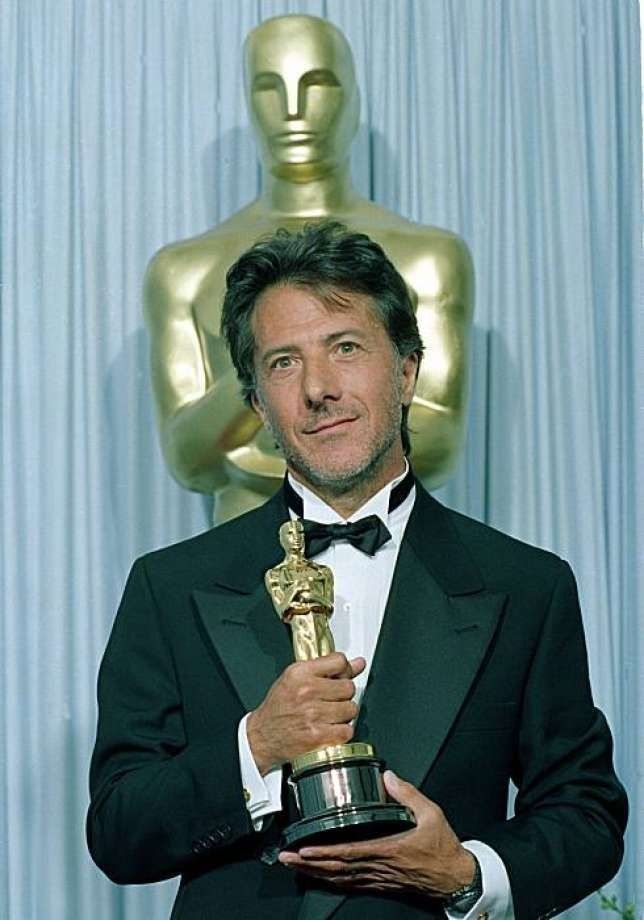
A three-time Oscar nominee, Hoffman finally won Best Actor as a divorced single father in Kramer vs. Kramer (1979) and received another nomination for Tootsie (1982). In this film, he played an unemployed actor who pretended to be a woman and found a steady job on a daytime soap opera.
Two comebacks proved to be major triumphs for Hoffman in the 1980s. The first was his acclaimed performance as Willy Loman in the 1984 Broadway revival of Death of a Salesman. The show was adapted for television the following year for CBS and earned Hoffman an Emmy Award and a Golden Globe.
He also appeared on stage in London as Shylock in Sir Peter Hall’s The Merchant of Venice (1989).
Hoffman ended the decade with a second Oscar for his compelling portrayal of a middle-aged autistic man in Rain Man (1988). Unlike Hoffman’s earlier roles, the character in Rain Man is difficult to accept due to his emotionless nature. Still, the actor evokes just the right amount of sympathy from the audience.
Hoffman is a two-time Oscar winner, six-time Golden Globe winner and three-time BAFTA winner. For his lifetime achievements in the field of world cinema, Hoffman was awarded the Honorary Golden Bear of the Berlin Film Festival, the Honorary Cesar Award and a special award of the American Film Institute. In the 21st century, Hoffman continues his impressive career with memorable roles.
There are particularly significant characters in the work of this unusual actor who absorbed the metamorphoses of a complex, ever-changing world. They are not just more interesting, expressive or successful than others. These characters marked a new way of looking at the contemporary. Here is another reason for the rare appearance of Hoffman on the screens. Such a prophecy makes it extremely difficult to select each new role. The actor is directly connected with changes in the social climate and socio-psychological processes taking place in the country.
DEBUT AS A FILM DIRECTOR AT THE AGE OF 75
Switching to television, Hoffman starred as a former player in the HBO series Luck. This is a drama set in the world of professional horse racing. The actor returned to the big screen as a restaurant owner in Chef (2014). Then, he appeared in the television adaptation of Roald Dahl’s Esio Trot (2015), based on the children’s book about the bachelor.
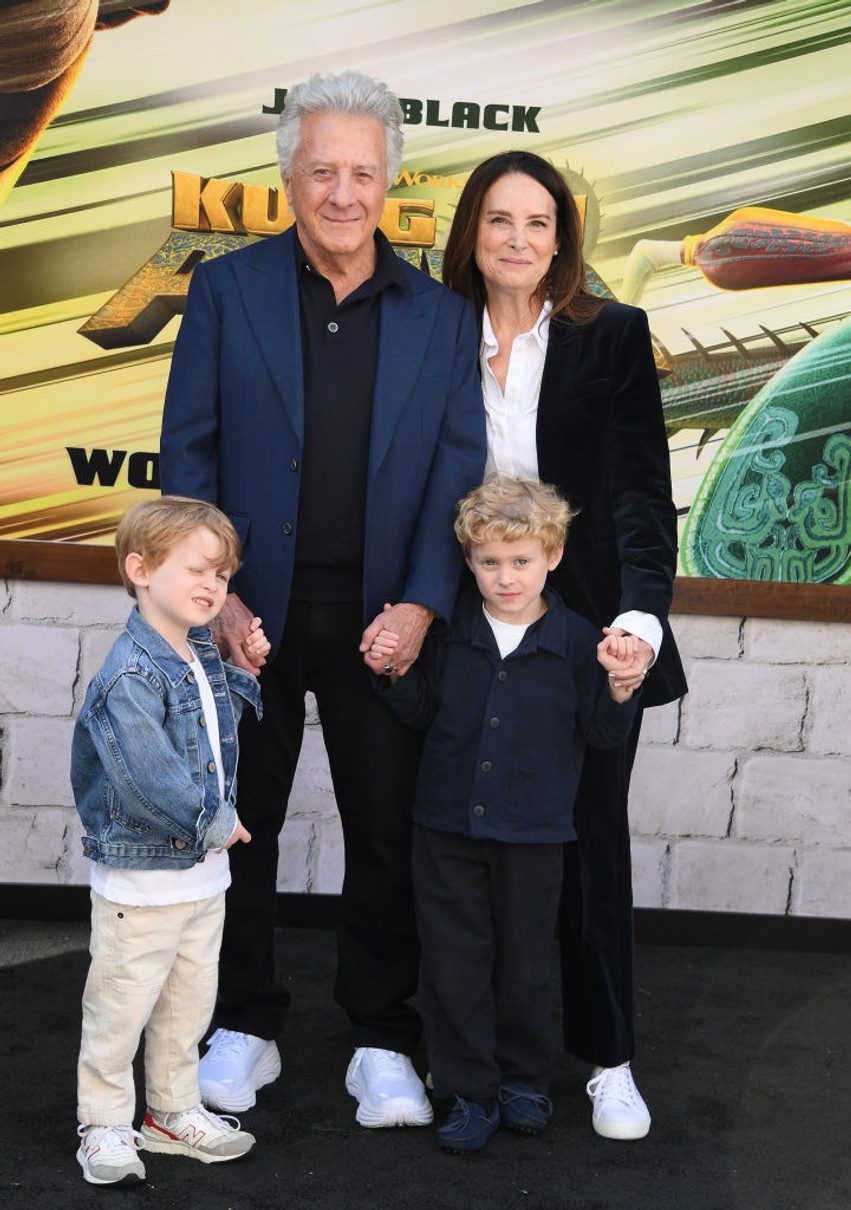
In 2012, at the age of 75, Hoffman made his directorial debut with Quartet. This is an ensemble comedy about former opera singers who live in an English home for the elderly.
Dustin Hoffman is a character theater actor who has performed in various venues, on big stages and small ones, on Broadway and very far off it. He played wherever there was at least the likeness of a stage and wherever the demanding imagination of American theater critics stretched the Broadway cord.