


The name Dr. Dre has long transcended hip-hop, becoming a global symbol of musical innovation, production perfection, and entrepreneurial triumph. Born Andre Romelle Young, the man known as Dr. Dre played a pivotal role in defining U.S. West Coast rap. He pioneered the signature G-funk sound and introduced the world to artists who would go on to reshape the music industry for decades. His career spans over forty years, seamlessly blending creativity, business, film, and philanthropy. Read more on los-angeles-trend.
Early Life and Origins
Andre Romelle Young was born on February 18, 1965, in Compton, California, to Theodore and Verna Young. The future musician grew up in South Los Angeles, a region then grappling with social instability and rising street violence. These challenging surroundings meant his family moved frequently, and Andre attended several schools, including Vanguard Junior High, Roosevelt Junior High, Centennial High, and Fremont High.
Music became his escape early on. Inspired by hip-hop pioneers like Grandmaster Flash, he began experimenting with track mixing and performing at the Los Angeles club Eve After Dark. It was there that he adopted the stage name Dr. Dre, a moniker that combined his first name with an homage to his early basketball idol, Julius “Dr. J” Erving.
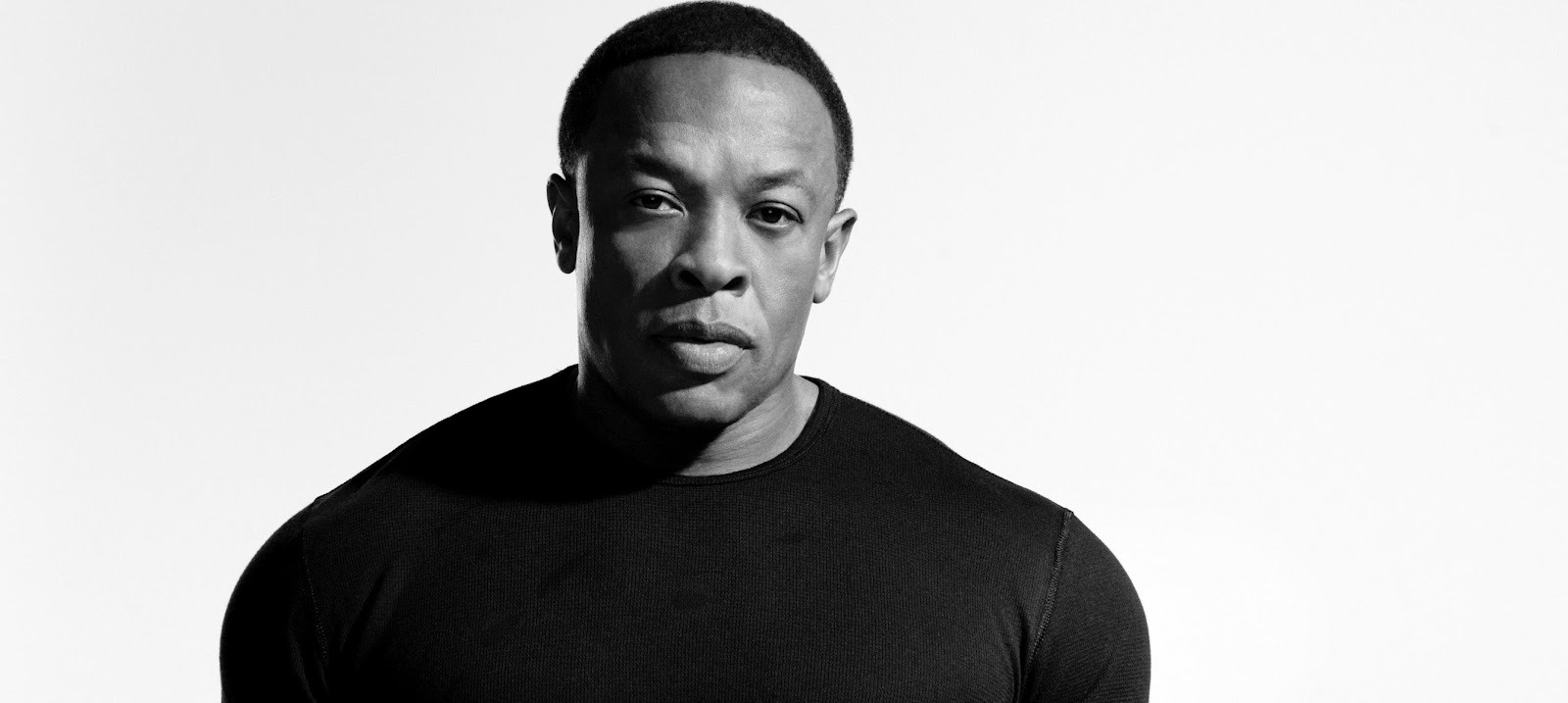
World Class Wreckin’ Cru and the Birth of N.W.A
The first major milestone in Dr. Dre’s career was his membership in the World Class Wreckin’ Cru. The group released its debut album in 1985, and the single “Surgery” became a significant local hit. During this era, Dre wasn’t just a DJ; he was actively honing his production craft, working with multi-track recordings and live instrumentation. These sessions laid the groundwork for his legendary, meticulous approach to sound design.
In 1986, Dr. Dre began collaborating with Eric Wright (Eazy-E) and O’Shea Jackson (Ice Cube). Together, they formed N.W.A, a group that would become a cultural phenomenon and change the course of American hip-hop. Their 1988 album, Straight Outta Compton, catapulted them to national stardom while igniting fierce public debate over its raw and unflinching depiction of ghetto life. Despite a lack of radio airplay and pressure from federal authorities, the record was a massive commercial success and established a new direction for rap music. As the group’s sonic architect, Dre crafted a sound that would eventually evolve into the world-famous G-funk style.
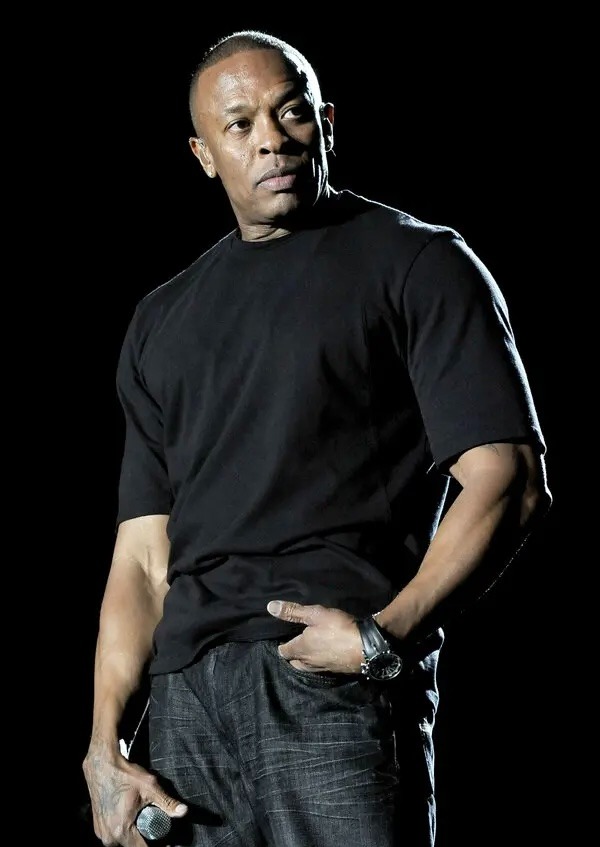
The Death Row Records Era
Following the dissolution of N.W.A in 1991, Dr. Dre left Ruthless Records to co-found Death Row Records with Suge Knight. In 1992, he released his solo debut, The Chronic, which proved to be a watershed moment for the entire music industry. The album fused 1970s funk samples with heavy bass and laid-back rhythms, creating the quintessential West Coast sound.
The lead single “Nuthin’ but a ‘G’ Thang,” featuring a young Snoop Dogg, peaked at number two on the Billboard Hot 100, while the track “Let Me Ride” earned Dre a Grammy Award. During this same period, he produced Snoop Dogg’s debut album, Doggystyle, which famously debuted at number one on the Billboard 200.
In 1996, seeking more creative and business control, Dr. Dre left Death Row to launch his own label, Aftermath Entertainment, in partnership with Interscope Records. A pivotal turning point for the label came in 1998 when Dre signed a then-unknown rapper from Detroit named Eminem.
Dre’s second solo effort, 2001, returned him to the top of the charts. The multi-platinum record solidified his reputation as a producer capable of evolving the classic West Coast sound to meet modern musical trends.
A Master Producer
Throughout the 2000s, Dr. Dre focused primarily on his work behind the boards. He played a crucial role in launching or revitalizing the careers of Eminem, 50 Cent, The Game, Mary J. Blige, and Busta Rhymes. Landmark albums like The Eminem Show and 50 Cent’s Get Rich or Die Tryin’ became some of the highest-selling releases of the decade. His production style evolved to include more live instrumentation—keyboards, guitars, and intricate rhythmic structures—which set a new gold standard for hip-hop production.
After years of anticipation and delays surrounding the fabled Detox project, Dr. Dre finally released Compton in 2015. Inspired by the biographical film Straight Outta Compton, the album served as a grand finale to his solo discography and received widespread critical acclaim for its sophisticated production and contemporary edge.
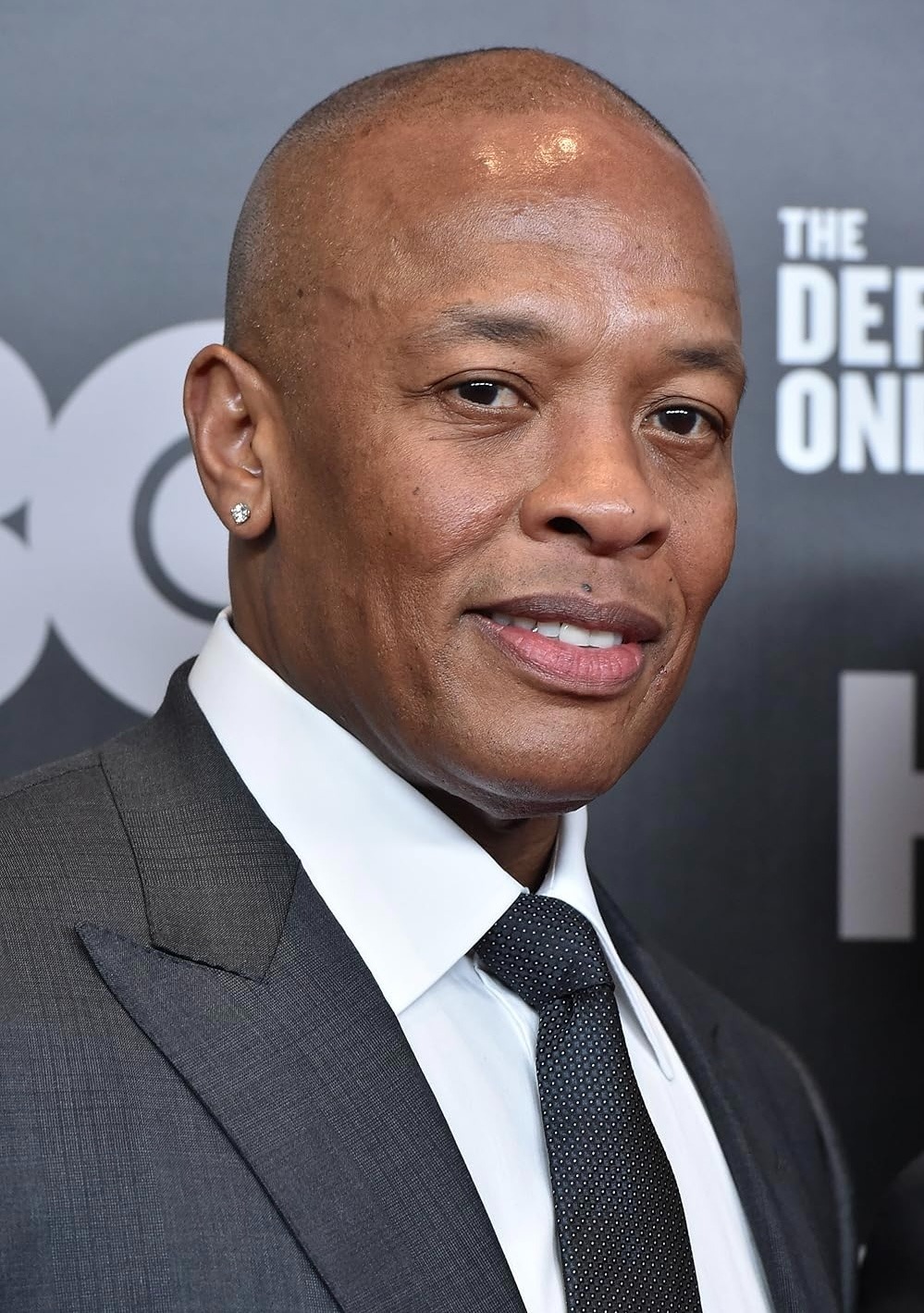
Business, Philanthropy, and Legacy
Beyond the studio, Dr. Dre has seen massive success as an entrepreneur. In 2006, he co-founded Beats Electronics with Jimmy Iovine. The company’s premium headphones became a cultural staple, and in 2014, Apple acquired Beats for $3.4 billion. The deal solidified Dr. Dre’s position as one of the wealthiest figures in music history.
Dre has also used his fortune for philanthropic endeavors. Most notably, he donated $70 million to the University of Southern California (USC) to establish the USC Iovine and Young Academy for Arts, Technology and the Business of Innovation. He has also remained committed to his roots, supporting educational infrastructure projects in Compton.
While his career has been largely defined by success, it has not been without controversy, including publicized allegations of past violence against women. In 2015, following the release of the Compton album, Dre issued a public apology for his past behavior, acknowledging the mistakes of his youth and taking responsibility for the pain he caused.
A seven-time Grammy Award winner, Dr. Dre has been recognized by Rolling Stone as one of the 100 Greatest Artists of All Time. His impact on music, culture, and the business of entertainment is undeniable. He didn’t just create the sound of several hip-hop eras—he built a platform that allowed generations of new artists to thrive.